
Walking a home at 7am with 28 open items across three trades in your head — and a closing date that isn't moving.
For home builders — construction & warranty teams
You build the home.
We help you stand behind it.
One shared, structured punch list for every home you build, sell, and stand behind — from the pre-drywall walkthrough to the last warranty claim.
Start with one property. No migration project, no rollout committee.
Outlet missing near kitchen counter
Homeowner issue
Before
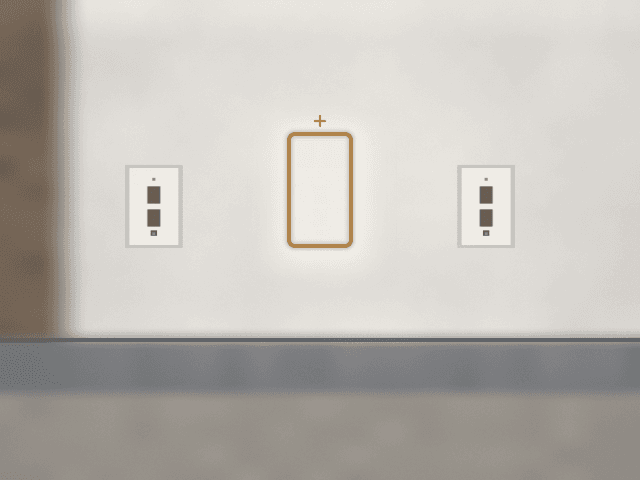
Outlet is missing on the kitchen wall near the counter.
Builder response
Completion documentation
You see exactly what needs to be fixed
Standing behind a home is a relay, not a sprint.
Your construction team runs the first leg. Your warranty team runs the long one. Nobody sees how much work both take. We do.
Juggling schedules, deliveries, and a move-in date that can't slip — while the walkthrough list keeps growing.
Inheriting a home you've never seen, a homeowner you've met only recently, and a history that lives in someone else's inbox.
The punch list already exists.
It's just scattered across a dozen places.
No single version is current — so the homeowner, your team, and the trades are all working from a different list.
Text threadsEmail chainsSpreadsheetsPhotos on a phoneSticky notesVoicemails…someone’s memory
Rework & repeat trips
Items get missed, then rediscovered — and someone drives back out to fix what a current list would have caught.
Stalled sign-off
Closing waits on “is everything actually done?” — a question no one can answer from a text thread.
Eroded trust
The homeowner feels chased down instead of taken care of — the opposite of the handoff you want.
And then the home closes — and whatever history existed walks away with the construction team. Your warranty team starts every claim from zero: no photos, no fix record, no context. Just a homeowner on the phone.
Every scattered thread, into one shared list.
One list, from pre-drywall to year one.
Follow one home through. The list is started by your construction team, shared with the homeowner, and inherited — complete — by your warranty team.
Pre-drywall inspection
Catch it while the walls are open.
Inspection findings go straight onto the home's list, tied to the exact room and system — no report to re-type, no email to dig through. Your own crew's finds land there too, and so does anything the homeowner spots on their walkthrough. Fixed now, they're an hour of work. Found at year one, they're a drywall cut and an unhappy homeowner.
HomeownerConstruction teamInspectorWarranty team
Construction complete · Pre-closing walkthrough
Walk it together. Coordinate on the spot.
You and the homeowner walk the home from the same live list — inspection findings already on it. Anything anyone spots goes straight onto the list too: logged with a photo before you leave the driveway, with a status both of you can watch move. No follow-up email chain — the walkthrough is the record.
HomeownerConstruction teamInspectorWarranty team
Closing & moving in
Ownership of every open item becomes clear.
The homeowner confirms and signs off on what’s done — archived with photos and dates. Whatever remains is split explicitly at closing: punch-out items stay with your construction team, warranty-scope items move to your warranty team. No gray zone, no “I thought you had that one” — every item has one owner, on the record.
HomeownerConstruction teamInspectorWarranty teamThe warranty years — 90-day & one-year
Your warranty team takes over — and benefits.
They start with clear ownership of their items and the home's whole history behind each one — every photo, fix, and sign-off from construction. New claims and inspection findings land on the same list, and every homeowner interaction — documentation, communication, scheduling — happens in one place instead of an inbox.
HomeownerConstruction teamInspectorWarranty team
OpenIn progressResolvedClosed
The same four states, at every stage, for every party.
Three streams in. One repository.
Items find the list on their own — from your team, your homeowner, and your inspector. Nobody re-types anything, and nothing waits in an inbox.
Track your own finds — privately
Anything your crew comes across goes on the list too, as internal items. They don't have to be shared with the homeowner — you choose what's visible and what stays team-only.
Their finds file themselves
What the homeowner spots during construction or a walkthrough lands directly on the property's list — no email to dig out, no voicemail to transcribe, no item lost in a thread.
Findings, not paperwork
Inspection findings go straight onto the same list, tied to room and system — instead of living in a PDF someone on your team has to mine and re-type.
128 Maple Court · Punch list
One list — every source, every status
Garage outlet has no power
OpenGarage · Outlet
Your teamVisible to your team onlyMaster bath faucet drips
In progressPrimary Bath · Faucet
HomeownerUpstairs won’t hold temperature
In progressUpstairs · Condenser
InspectorDishwasher leaves standing water
ResolvedKitchen · Dishwasher
Homeowner
The homeowner is on the list — not in your voicemail.
Documentation, communication, and scheduling with your homeowner — all of it happens on the item itself, in an app they already have.
Issues come to you first
The homeowner has their own getFIXLY app. They see their home — just their home — and add issues right where your team will fix them. No setup to manage, no email chains, no voicemail.
Progress they can watch
Every item moves in their hands — Open, In progress, Resolved. Silence is what erodes trust; a status that moves is what builds it.
Scheduling without phone tag
The repair visit is agreed on the item itself — the date, the access, who’s coming. No call-back loop, no missed windows, no “nobody told me.”
Documentation as it happens
Photos, fixes, and sign-offs collect on each item as the work happens. When anyone asks “was this handled?” — the answer is already written down.
A homeowner who felt taken care of becomes the review, the referral, and the repeat buyer your local reputation is built on.
The scattered list has a price tag.
Both of your teams already pay it — in claims, disputes, and hours spent chasing instead of finishing.
$2,000–5,000
typical warranty claim cost, per home
$5,000–20,000
legal cost of a single warranty dispute
$30,000+
value of one lost referral in your market
5–10 hrs/week
spent reconciling spreadsheets, texts & email
On 100 homes a year, trimming warranty claims by even 2% — and skipping one dispute — pays for getFIXLY several times over. The documentation trail does the rest.
Figures are industry ranges from builder warranty and dispute research; your numbers will vary — that's what the walkthrough is for.
Fair questions.
We already have a system that works.
Keep it. Spreadsheets and email do work — until the handoff. getFIXLY replaces the chasing, not your process: one live list everyone reads the same way, so your team spends its time finishing items instead of reconciling versions of them.
Does the homeowner see everything on the list?
No — you decide. Items your team logs for itself stay internal unless you share them; the homeowner sees their own items and the progress you make visible. One repository doesn't mean one audience.
Does our warranty team need separate software?
No — that's the point. The same list simply outlives closing. Your warranty team picks up each home where construction left it, with the full history of every item, photo, and sign-off, and new claims land in the same place.
What about our trades and subs?
Today, your team tracks trade work on the list and coordinates with subs the way you already do. Direct trade access — where a sub receives exactly what’s needed and marks the work complete from the field — is on our roadmap.
Where does our data live, and who can see it?
Your data is yours. Sensitive fields are encrypted at rest, access is scoped per home, and homeowners see only their own home — never your other projects or communities.
Every fix, in one place.
Every home, with its whole history.
Start with one property. See the difference on the next walkthrough.
Prefer email? hello@getfixly.app